Top cash isa providers in the UK for 2025
- Nyheter
Discover the best cash ISA providers in the UK for 2025, with top rates up to 4.5% AER, easy access and fixed options. Compare the top 10, including Plum and…

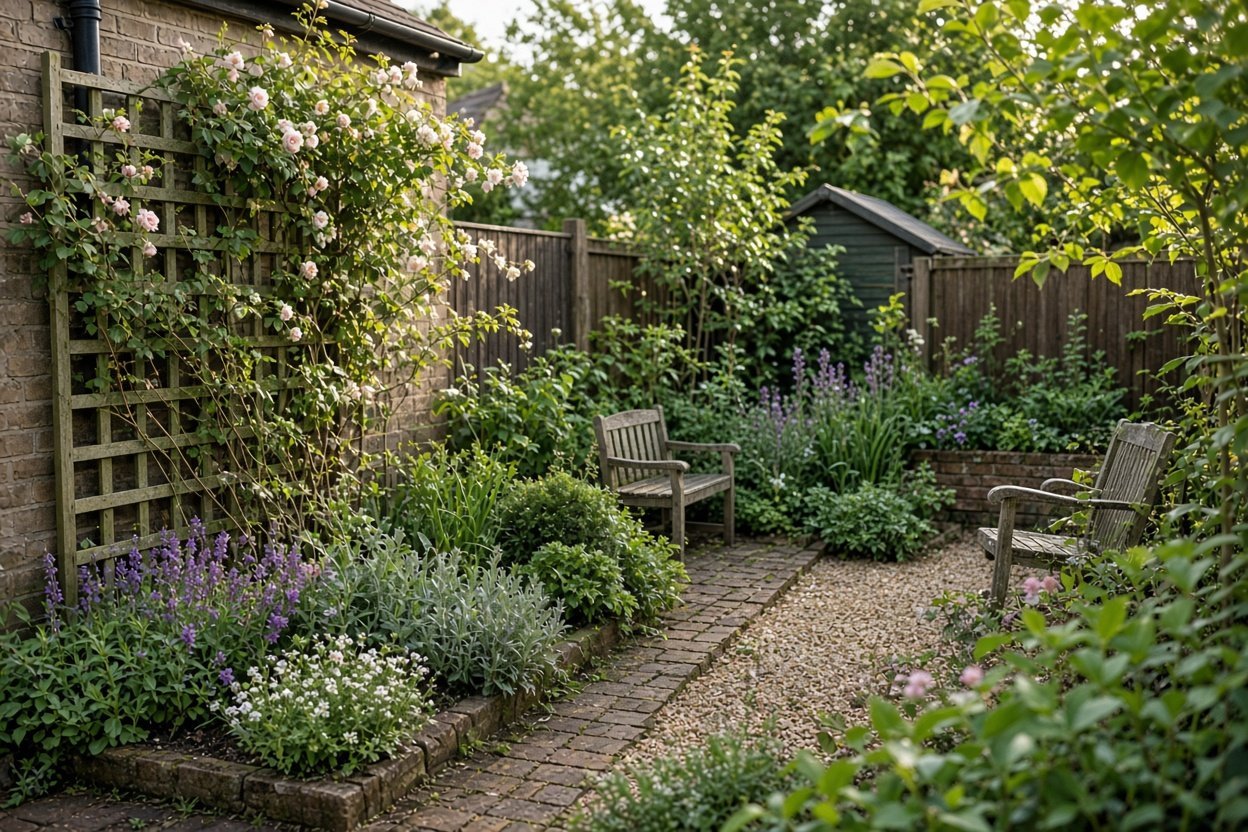

Start with the garden’s purpose and layout, then choose surfaces, planting and containers to support it. Decide whether the space is mainly for sitting, entertaining, growing, wildlife or a combination.
A practical planning order is:
Keep the material and planting palette limited, choose the right plant for the right place and avoid overloading a small garden with too many unrelated features. The RHS recommends fewer plant varieties and a coherent, repeated planting style in small spaces. Its small-garden design guidance includes examples such as cottage-garden plants combined with clipped box and spiral topiary.
Use repeated planting, clear zones and vertical space to make a small garden feel more considered. Relating the materials and plants to one another is often more effective than adding many separate features.
A long, narrow garden can be divided into several terraces, each with a different mood. House & Garden shows how Mediterranean planting and natural canopies can work in this type of layout.
Decide the route through the garden and the position of each usable area before choosing materials. Draw the garden from above and mark the house, boundaries, doors, sunny areas and the route used most often.
| Layout approach | Useful for | Key design move |
|---|---|---|
| Terraced zones | Long, narrow gardens | Divide the length into areas with distinct planting or atmosphere. |
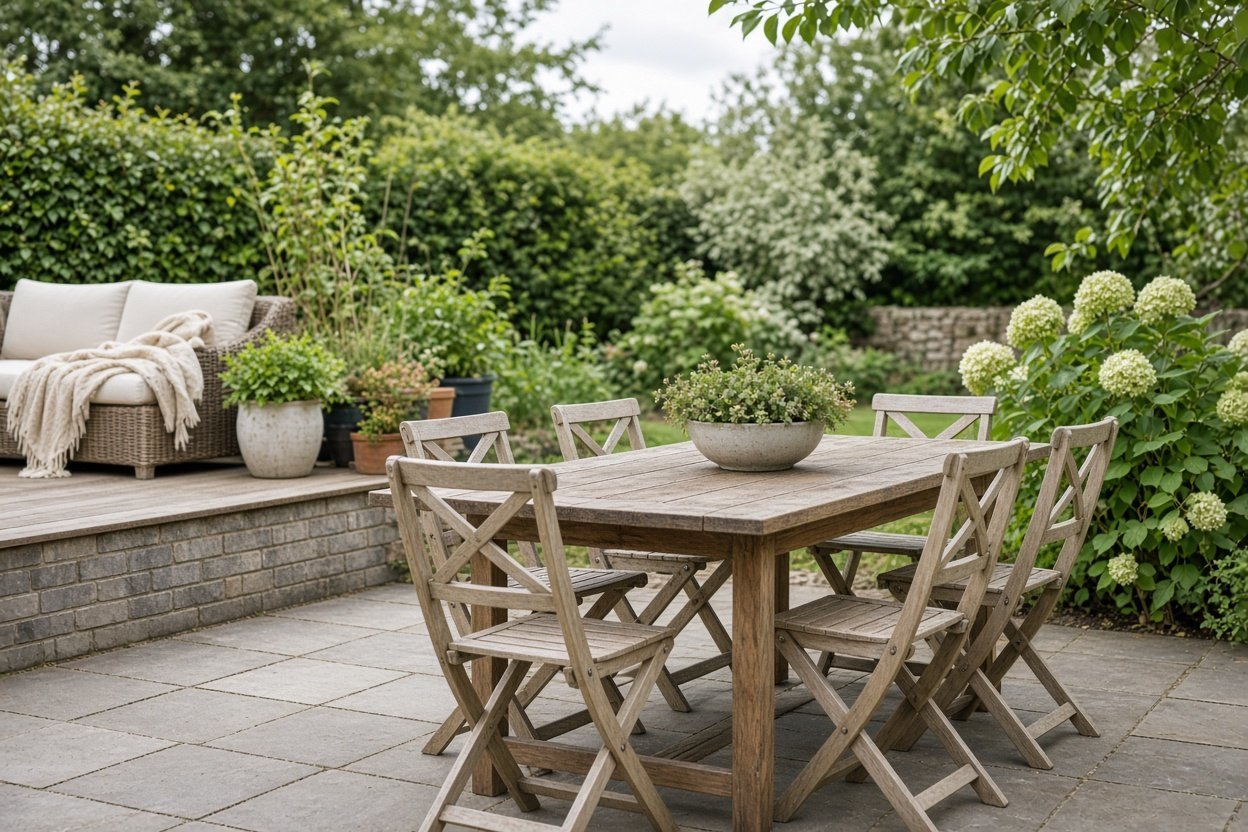
| Surface-led layout | Small entertaining spaces | Use paving, gravel or decking to define the main usable area. |
| Container layout | Little or no soil | Group plants in large pots or raised planters. |
| Vertical layout | Very small gardens | Train climbers on trellis or wire mesh and keep floor space open. |
| Soft-edged layout | Gardens needing a gentler appearance | Combine curved forms, naturalistic planting and reclaimed materials. |
Micro-zoning is a reported UK garden trend for 2026. It creates distinct areas in a compact garden through different surfaces, wall trellises and varied planting heights. An Argos outdoor-living report records that 31% of respondents used different surfaces to create zones. This approach can separate sitting, growing and movement without requiring a large garden.
Focus on improvements that change the structure or planting without replacing the whole garden. The RHS highlights three budget-friendly options: train climbers on wire mesh or trellis, use environmentally friendly timber paint and propagate or divide plants from friends and family.
For a very small garden on a budget, prioritise one visible boundary, one usable surface and one repeated planting idea. This creates a connected result without filling the space with unrelated purchases. The RHS offers further budget-friendly garden suggestions.
A modern small garden benefits from clean lines, interesting foliage and a limited colour palette. Architectural plants such as phormium, cordyline and yucca can provide strong shapes, while repeated planting keeps the design visually connected.
One designer’s three golden rules are to design the garden as a whole, limit hard landscaping to a maximum of three neutral-coloured materials, and use repetition and rhythm in planting and colour. Apply the same approach to the main surface, containers and planting so that each part supports the overall layout.
A small number of large containers can support a modern look more effectively than a collection of unrelated pots. For inspiration on modern planting and structure, see the designer guidance on modern garden ideas.
A low-maintenance garden reduces repetitive jobs through planning. The RHS notes that a paved, gravelled or decked area with larger borders can require less work than maintaining a small lawn.
The RHS describes low-maintenance design as eliminating or reducing repetitive jobs through planning, rather than making a garden bland. Its low-maintenance gardening advice explains how to reduce routine work without removing planting or character.
A front garden should balance hard landscaping with planting, especially when it also needs to accommodate parking. Keep the access route clear, then use planting and surfaces to make the entrance feel intentional.
For a small front garden, consider a narrow planted border beside the path, containers around the doorway or a restrained combination of paving and planting. Repetition can help the front garden relate to the house: repeat a plant, colour or material rather than introducing a new feature at every point.
The RHS explains how to balance hard landscaping and planting in its guide to front-garden design.
A garden without grass can combine a usable surface with planted borders, containers and open soil. Paving, gravel or decking can define the main area, while larger borders prevent the space from becoming entirely hard.
For a small garden with no grass, decide whether the priority is seating, circulation or growing. A paved area can support seating, gravel can define a looser section and raised planters can provide growing space where soil is limited. Keep the hard-landscaping palette controlled and use repeated plants or colours to connect the sections.
Reported 2026 garden trends include less paving, more open soil, wildlife-friendly planting and climate-resilient planting. These ideas can work with a no-grass layout by leaving generous planted areas rather than covering every surface.
Give the garden’s main activity the clearest and most accessible area.
A compact seating area, a few well-placed planters or one productive container section can make the garden useful before a larger redesign is attempted.
The RHS identifies Mediterranean, geometric or formal, and cottage-garden styles as adaptable themes. Cottage style can also be adapted for urban gardens.
| Style | Design direction | Works well when |
|---|---|---|
| Mediterranean | Use a clear surface-led structure with planting suited to the setting. | You want a defined outdoor room with a strong planting atmosphere. |
| Geometric or formal | Use ordered lines, repeated forms and controlled materials. | You prefer a tidy, structured layout. |
| Cottage garden | Repeat a coherent planting style and adapt it to the available space. | You want softer planting in an urban garden. |
| Naturalistic | Use softer forms, open soil, reclaimed materials and varied planting. | You want a less rigid, more sustainable-looking garden. |
Reported 2026 trends include climate-resilient planting, wildlife-friendly design, less paving, more open soil, tabletop vegetables, bold planting colours, oversized containers and softer curved forms. Other coverage highlights naturalistic planting, reclaimed materials and more sustainable garden design.
For a small garden, micro-zoning is especially practical: use different surfaces, wall trellises and planting heights to create distinct areas. Choose that approach when the layout needs separate spaces, or choose climate-resilient and wildlife-friendly planting where those priorities suit the garden.
Start with a climber trained on wire mesh or trellis, environmentally friendly timber paint for existing timber features, and plants propagated or divided from friends and family. Repeat one planting idea or colour so that these changes look deliberate rather than disconnected.
One designer’s three rules are: design the garden as a whole, limit hard landscaping to a maximum of three neutral-coloured materials, and create repetition and rhythm through planting and colour.
Choose a clear style, establish the layout before selecting features, repeat a limited palette and use planting at different heights. In a small garden, vertical planting, terraces, containers and distinct zones can add interest while keeping the floor plan usable.
Begin with the garden’s purpose, then map the layout, surfaces, planting and maintenance requirements in that order. Mark access routes before selecting individual features.
Use grouped large pots or raised planters, add climbers to trellis or wire mesh and divide the garden into clear zones.
Reduce repetitive jobs through planning, use a coherent planting style and combine a practical surface with larger planted borders. Low maintenance is about reducing avoidable work, not removing all planting or character.
Yes. Balance the parking area with planting and a clear route to the entrance. Keeping planted edges or containers can help the space feel like a garden as well as a parking area.