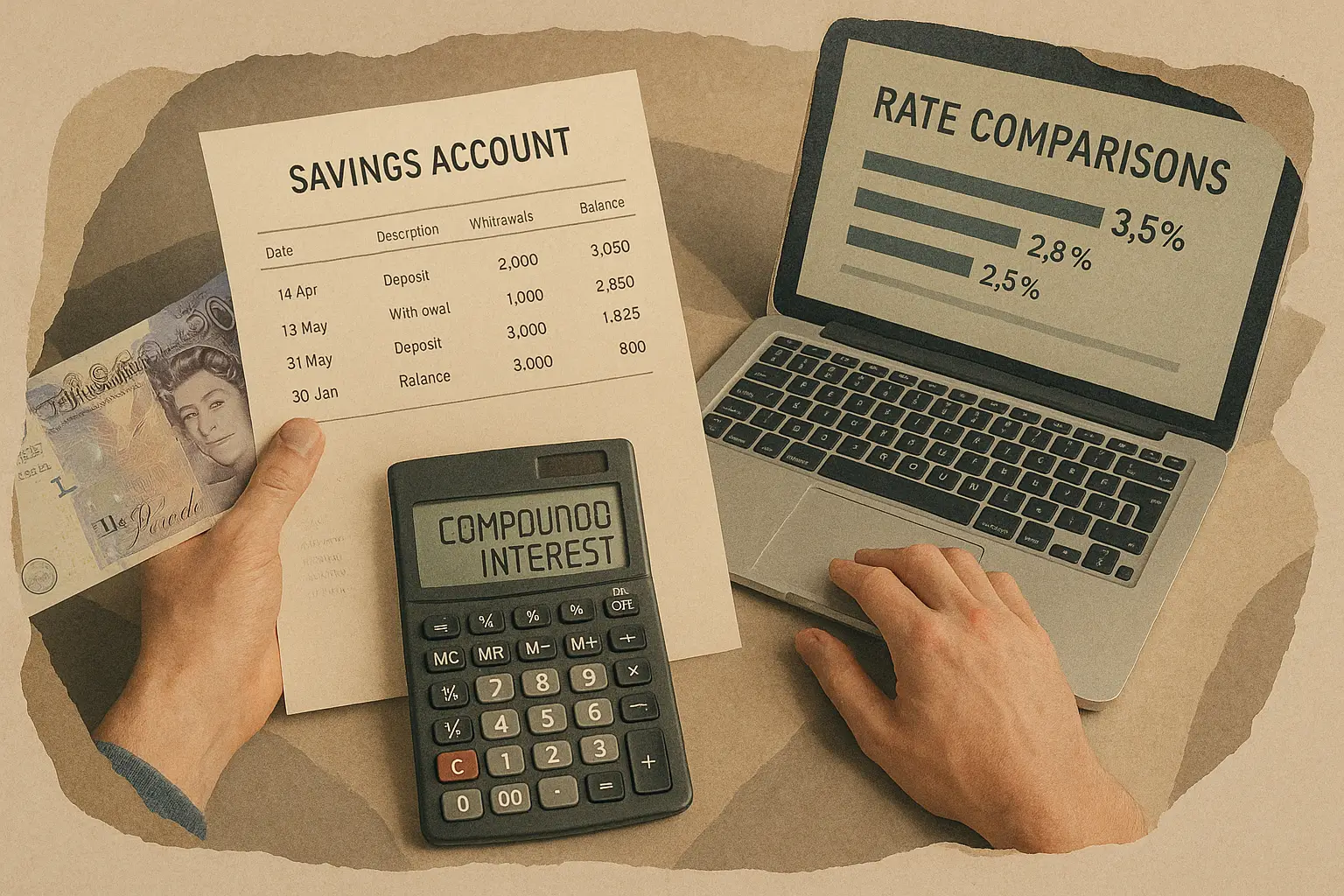
Tip: Before opening a high yield savings account, check your eligibility and compare current rates using tools from trusted sites like MoneySavingExpert to ensure you get the best deal for your needs.
What are high-yield savings accounts? Key features and benefits
High yield savings accounts offer savers significantly better interest rates than standard accounts, making them an attractive option for growing money safely. In the UK, these are often referred to as high interest savings accounts and provide higher returns through competitive annual equivalent rates (AER). This guide explains what high yield savings accounts are, their key features, and benefits, focusing on UK options for 2025.
Understanding high-yield savings accounts
Definition and basics
A high-yield savings account is a type of deposit account that pays a higher interest rate on your savings compared to traditional accounts. Unlike regular savings, these accounts are typically offered by online banks or building societies aiming to attract customers with better yields. In the UK, they come in forms like easy access or fixed-rate options, helping you combat inflation by earning more on your cash.
How they differ from standard savings
Standard savings accounts from high street banks like Lloyds or Halifax often provide low interest rates, sometimes below 1% AER, due to their focus on everyday banking services. High yield savings accounts, however, can offer rates up to 4.75% for easy access as of October 2025, according to MoneySavingExpert. The main difference lies in returns and accessibility, with high yield options usually requiring online management but rewarding savers with superior growth potential.
How high-yield accounts work
High yield savings accounts work by crediting interest daily or monthly, compounded to maximise earnings under the AER. You deposit funds, and the bank invests them in low-risk assets to generate higher yields. Withdrawals may be limited in fixed-term accounts, but easy access versions allow flexibility. For example, a £10,000 deposit at 4.5% AER could earn around £450 annually, far outpacing standard accounts.
Key features of high-yield savings accounts
Interest rates and AER
Interest rates on high yield savings accounts are expressed as AER, which accounts for compounding to show the true yearly return. UK rates vary: easy access up to 4.75%, fixed bonds up to 4.5% for one year, and regular savers up to 7.5% AER in 2025, per MoneySavingExpert. These rates are variable and influenced by the Bank of England base rate, so monitoring changes is essential for optimal savings.
Access and withdrawal rules
Most high yield savings accounts offer easy access with no withdrawal penalties, ideal for emergency funds. Fixed-rate versions lock your money for a set period, like 12 months, to secure the rate. Some impose monthly limits, such as six withdrawals, to maintain the high yield. Always review terms to match your liquidity needs.
Minimum deposits and fees
Minimum deposits for high yield savings accounts typically range from £1 to £5,000, making them accessible. Many online options, like those from Nationwide, have no fees, but watch for introductory bonuses that may drop after a period. Business high yield savings accounts might require higher minimums for corporate savers.
Benefits of high-yield savings accounts in the UK
Higher returns on savings
The primary benefit is earning more interest, helping UK savers beat inflation. For instance, top high yield interest savings accounts yield up to 4.52% for easy access, as noted by money.co.uk. This compounds over time, significantly boosting long-term savings without market risks.
Safety and FSCS protection
High yield savings accounts are safe when held with UK-regulated providers protected by the Financial Services Compensation Scheme (FSCS), covering up to £85,000 per person per institution. This government-backed scheme ensures your money is secure even if the bank fails. Unlike investments, your principal is guaranteed, making them low-risk for cautious savers.
Flexibility for different needs
These accounts suit various goals, from emergency funds to short-term savings. Online high yield savings accounts offer app-based management for convenience, while options like children’s accounts provide high yields with parental oversight. You can have multiple accounts to diversify across providers.
High-yield options for specific groups
Business accounts
Business high yield savings accounts allow companies to earn competitive rates on surplus cash, often with higher limits and dedicated support. Providers like HSBC offer these with AER up to 3-4%, separate from personal accounts for tax purposes. They include features like unlimited transfers, ideal for cash flow management.
Children’s savings
Top high yield children’s savings accounts, such as those from Halifax, offer rates up to 5% for under-18s, encouraging early saving habits. These accounts often have low minimums and tax-free growth via Junior ISAs. Parents control access until maturity, providing security and growth for future education funds.
Online vs traditional banks
Online banks like Monzo provide the best online high yield savings accounts with rates often exceeding high street offerings due to lower overheads. Traditional banks may offer branches but lower yields; for example, compare high yield savings accounts from digital providers for better returns in 2025.
Pros, cons, and safety considerations
Advantages and drawbacks
Pros include superior interest and FSCS protection, making high yield savings accounts worth it for idle cash. Cons involve variable rates that can fall and limited access in fixed terms, potentially reducing liquidity. Overall, they outperform standard accounts for growth-focused savers.
Risks involved
Risks are minimal, but inflation could erode real returns if rates lag. There’s no loss of principal in FSCS-protected accounts, unlike stocks. Variable rates might decrease with economic shifts, so diversify across fixed and easy access options.
Using a savings calculator
A high yield savings accounts calculator helps project earnings; for £5,000 at 4.75% AER, expect £237 yearly. Tools from Wise factor in compounding and taxes. Use one to compare scenarios and optimise your strategy.
Current rates and UK comparisons for 2025
In 2025, UK high yield savings accounts rates remain competitive amid steady base rates. Easy access tops at 4.75%, fixed at 4.5%, and regular savers at 7.5% AER. For comparisons, see the table below highlighting top providers.
| Provider | AER (%) | Min Deposit | Access Type | FSCS Protected |
|---|---|---|---|---|
| Nationwide | 4.75 | £1 | Easy Access | Yes |
| Halifax | 4.5 | £5,000 | Fixed 1 Year | Yes |
| Lloyds | 7.5 | £25/month | Regular Saver | Yes |
| Monzo (Online) | 4.52 | £1 | Easy Access | Yes |
Rates sourced from Money To The Masses and NerdWallet, accessed October 2025. For the best savings rates, explore detailed guides.
In summary, high yield savings accounts provide essential benefits like higher interest and safety for UK savers. Consider your goals and use calculators to decide. For top picks, visit comparison sites.
Frequently asked questions
What is a high-yield savings account?
A high-yield savings account is a bank product offering above-average interest rates on deposits, often through online platforms. In the UK, it’s akin to high interest savings accounts with AER up to 4.75% for easy access. These accounts help grow savings securely, protected by FSCS up to £85,000, making them suitable for emergency funds or short-term goals.
How does a high-yield savings account work?
It works by paying interest on your balance, compounded frequently to reflect the AER. Funds are deposited, and the provider earns from low-risk investments to offer higher yields than standard accounts. Withdrawals depend on the type—easy access allows anytime use, while fixed locks funds for guaranteed rates.
Are high-yield savings accounts safe?
Yes, in the UK, they are safe if from authorised providers under FSCS protection, covering £85,000 per depositor. Unlike stocks, there’s no market risk, and interest is predictable. Always verify FSCS eligibility to avoid rare institution failures.
The Financial Services Compensation Scheme ensures security, adapting US FDIC concepts for British savers.
What are the benefits of a high-yield savings account?
Benefits include higher returns to beat inflation, flexibility in access types, and FSCS safety. For 2025, rates like 7.5% on regular savers maximise growth. They’re ideal for beginners building habits without investment complexities.
Can I lose money in a high-yield savings account?
No, you cannot lose principal due to FSCS protection and fixed interest. However, if inflation exceeds your AER, purchasing power may decline. Variable rates could also dip, but overall, risks are low compared to higher-yield investments.
What is the difference between a savings account and a high-yield savings account?
A standard savings account offers low interest (under 1% AER) with basic access, often from high street banks. High-yield versions provide 4-7% AER, usually online, with similar safety but better returns. The key is yield potential, suiting proactive savers over passive ones.
Are high-yield savings accounts worth it in the UK for 2025?
Yes, with rates up to 4.75% easy access, they outpace inflation and standard options. For businesses or children, specialised accounts add value like tax efficiency. Monitor Bank of England changes, as worth depends on your savings amount and horizon.